
China has become a major production base for cargo electric bike systems, serving retailers, delivery fleets, and family transport markets worldwide. This article examines manufacturers that combine practical design, stable production, and dependable after-sales support.
The best supplier is not always the largest factory. A serious evaluation should consider payload ratings, frame weld quality, motor performance, battery safety documentation, and spare-parts availability. Factory experience also matters. A manufacturer producing thousands of units may handle customization better, but volume does not guarantee careful quality control.
Real-world details often reveal more than a polished catalog. Buyers should inspect brake response under heavy loads, steering stability on uneven roads, and battery performance during repeated delivery routes. Short test rides help. Longer testing is better. Questions about waterproof connectors, charger compatibility, warranty handling, and replacement timelines can expose hidden costs.
This guide compares leading China cargo electric bike manufacturers through these practical factors. It also considers production capacity, export experience, certification readiness, and communication quality. Some companies may appear highly capable online but provide limited technical evidence. That gap deserves attention.
The ranking is not absolute. Product specifications, factory policies, and market requirements can change quickly. A model suitable for urban deliveries may feel excessive for family use. Likewise, a low purchase price may become expensive after shipping, maintenance, and battery replacement. Careful buyers should verify every major claim before placing an order. That is not pessimism. It is responsible sourcing.
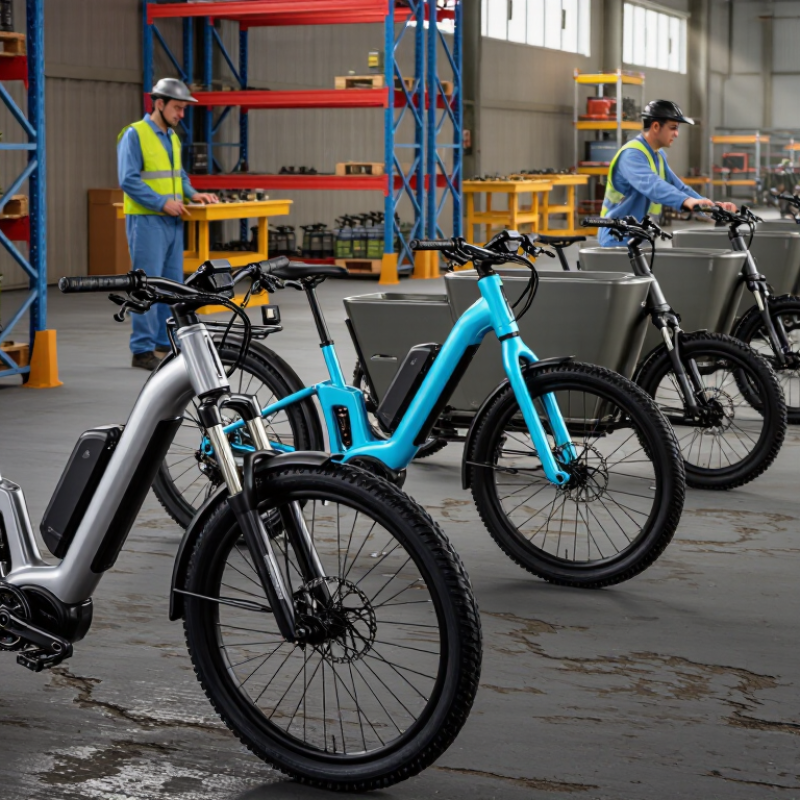
China’s e-bike market reached 42.28 million units in 2023, and cargo demand is still expanding. Delivery services, family transport, and small retailers increasingly need stronger electric bikes. The best China cargo electric bike manufacturers are not simply the largest factories. They offer proven frames, stable battery systems, clear testing records, and reliable after-sales support.
A capable manufacturer should explain its load rating with real test data. Look for reinforced racks, hydraulic brakes, weather-resistant wiring, and balanced motor performance on hills. Battery cells, charger protection, and thermal controls also deserve close inspection. A factory’s quality certificate is useful, but it is not enough. Request sample testing and inspect welds, tire clearance, cable routing, and packaging damage. No supplier looks perfect on paper.
Tips: Compare at least three factories before ordering. Ask for independent test reports, production photos, warranty terms, and replacement-part timelines. Confirm whether the stated payload includes the rider, cargo, and accessories. Some quotations seem attractive until shipping, spare parts, and compliance testing are added. A smaller order may cost more per unit, but it can reveal uncomfortable weaknesses early. Cargo bikes also need local approval and safe operating practices, so buyers should verify current regional requirements before purchase.
Ranking China cargo electric bike manufacturers requires more than comparing motor wattage. Payload should come first. Check the permitted total mass, including rider, battery, accessories, and cargo. A useful factory test carries a measured load over uneven roads, slopes, and repeated stops. Ask for frame fatigue results, brake performance, wheel strength, and loading instructions.
Range claims need careful reading. Test results should state rider weight, cargo weight, speed, terrain, temperature, and assist level. A bike traveling 80 kilometers without cargo may travel far less with two children and groceries. Battery capacity matters, but cell quality, controller settings, and thermal protection matter too. Real roads expose weak assumptions.
OEM capability deserves separate scoring. Review sample approval, frame geometry control, firmware access, spare-part planning, packaging, and production consistency. Request inspection records, not only polished photographs. Compliance should cover battery transport, electrical safety, braking, lighting, charger design, and local road requirements. Documentation must match the exact model and configuration.
That detail matters.
A factory may offer an attractive prototype but struggle with stable mass production. I would score communication and corrective action after a failed sample. This is often overlooked. A practical ranking can use weighted scores: payload at 35 percent, range at 25 percent, OEM control at 20 percent, and compliance evidence at 20 percent. The weighting is not universal. Delivery conditions, climate, and intended users can change the result. A spreadsheet can still mislead when field testing is too shallow.
When comparing five established Chinese cargo electric bike manufacturers, I examine the factory before the brochure. A dependable plant shows welding jigs, battery testing benches, and traceable assembly records. These details reveal process control more clearly than glossy range claims. One factory may offer thick steel racks, while another favors lighter aluminum frames. That choice affects payload, corrosion resistance, and repair work. Cargo buyers should measure deck length and axle spacing, not trust photographs.
One manufacturer has broad production capacity and many utility configurations. Its strength is consistent component sourcing, although customization can feel slow. Another focuses on durable frames and practical suspension. I would inspect weld penetration and kickstand strength before approving a fleet order. A third appears competitive on battery options and motor tuning. However, a larger battery is not automatically better. Cell quality, thermal controls, and replacement access matter more during daily deliveries.
A fourth factory emphasizes affordable commuter-cargo models, with simple controls and accessible parts. That simplicity helps maintenance, but finish quality may vary between production batches. The fifth combines mature quality systems with broad dealer support. Its weakness can be higher pricing and less flexible small-batch development. During a site review, I would request brake tests, loaded hill trials, and salt-spray evidence. I once focused too heavily on motor power and missed the importance of wheel spokes. That mistake changed my checklist. A credible supplier should answer clearly about warranty handling, software updates, spare controllers, and technician training. Records matter.
| Comparison Dimension | Typical Chinese Cargo E-Bike Specification | Factory and Product Evaluation Criteria | Buyer Verification Checklist |
|---|---|---|---|
| Vehicle Category | Long-tail, front-loader, three-wheel cargo, and delivery utility models | Frame design should match passenger, commercial delivery, or fleet use | Confirm intended load layout, road classification, and local registration rules |
| Rated Motor Output | Common configurations range from approximately 250 W to 1,000 W, depending on market and vehicle class | Continuous rated power, torque, thermal protection, and controller matching are more important than peak wattage | Request the motor rating label, test report, torque figure, and controller specifications |
| Battery Chemistry | Lithium-ion batteries are widely used; lithium iron phosphate is selected for higher cycle life and thermal stability | Cell traceability, battery-management system quality, enclosure protection, and serviceability determine long-term reliability | Verify cell type, UN 38.3 documentation, charger certification, warranty terms, and replacement availability |
| Battery Capacity | Typical cargo models use approximately 0.5–1.5 kWh; dual-battery versions may provide more usable energy | Real-world range depends on payload, terrain, temperature, speed, tire pressure, and riding mode | Compare watt-hours rather than amp-hours alone and request range results under a stated load |
| Payload Capacity | Cargo bicycles commonly support roughly 100–200 kg total payload; heavy-duty three-wheelers can be higher | Payload should be supported by the frame, fork, wheels, tires, brakes, rack, and kickstand as a complete system | Ask for the certified gross vehicle weight and separate limits for rider, rack, box, and passenger seating |
| Braking System | Mechanical or hydraulic disc brakes are common; larger cargo platforms benefit from hydraulic systems | Brake rotor size, heat dissipation, cutoff sensors, parking brake function, and spare-parts support affect fleet safety | Check stopping-distance tests, brake-load rating, pad availability, and compliance with destination-market rules |
| Frame and Cargo Structure | Steel and aluminum frames are both used; reinforced steel is common for high-load utility applications | Weld consistency, corrosion protection, fatigue testing, modular mounting points, and alignment control are key indicators | Request material details, weld inspection records, coating process information, and sample-unit measurements |
| Factory Quality System | Established exporters generally use incoming inspection, assembly checks, road testing, and final electrical inspection | Documented quality procedures, production traceability, corrective-action records, and independent audits reduce supply risk | Review ISO 9001 status, audit reports, inspection plans, defect-rate records, and batch traceability |
| Customization Capability | Common options include cargo boxes, rear racks, passenger seats, lighting, colors, decals, and battery configurations | Engineering support and minimum order quantity determine whether customization is practical | Confirm tooling charges, sample approval process, lead time, intellectual-property ownership, and spare-part compatibility |
| Export Compliance | Requirements vary by destination; electrical safety, electromagnetic compatibility, battery transport, and road-vehicle rules may apply | A capable factory provides market-specific documentation instead of relying on generic certificates | Specify destination country before quotation and verify applicable certificates with the importer or testing body |
| After-Sales Support | Support normally includes manuals, diagnostic guidance, replacement components, and warranty processing | Parts availability and response time are especially important for delivery fleets and commercial operators | Obtain a parts list, warranty matrix, service contact, repair procedures, and recommended critical spares |
When comparing China cargo electric bike manufacturers, standards provide a practical starting point. GB 17761-2018 covers Chinese electric bicycle requirements, including speed, motor output, dimensions, and electrical safety. It also addresses battery, charger, and tamper-resistant design details. For cargo models, buyers should check whether the declared limits match the actual load platform.
EN 15194 is widely used for electrically assisted pedal cycles in Europe. It examines pedal assistance, braking performance, lighting, structural safety, and electromagnetic compatibility. A cargo frame needs extra scrutiny. Inspect welds, steering joints, racks, and wheel spokes under realistic weight. Ask for test reports from an independent laboratory, not only a factory statement. Small details matter.
UL 2849 focuses on the electrical system as a complete assembly. It evaluates the battery, charger, motor, wiring, and control components together. Look for protection against overcharging, overheating, short circuits, and abnormal operation. Documentation should identify tested configurations clearly. Substituting a battery later may change the safety result.
Factory audits also reveal useful evidence. Review production records, incoming battery checks, firmware controls, and warranty data. Ride samples over uneven pavement with measured cargo weight. Listen for connector movement and watch brake response downhill. No checklist is perfect. Some inspection results remain subjective, and certificates can become outdated after component changes. A careful manufacturer should explain those gaps openly.
Manufacturer-neutral comparison of published numeric limits relevant to cargo electric bikes.
GB 17761-2018 specifies a 25 km/h assisted-speed limit, 400 W rated motor-power limit, 48 V nominal battery-voltage limit and 55 kg maximum vehicle mass. EN 15194 specifies a 25 km/h assisted-speed limit, 250 W continuous rated power and a 48 V maximum voltage. UL 2849 focuses on the electrical-system safety of e-bikes and does not define equivalent vehicle-performance limits, so those values are shown as not specified.
Choosing a cargo electric bike supplier requires more than comparing prices. The 25 km/h speed limit must be verified under controlled testing, not only shown on a display. Motor ratings also need clarification. A listed 400 W motor may describe peak output, while continuous output can be lower. Ask for test conditions, battery voltage, controller limits, and load performance. The IEA Global EV Outlook 2024 identifies China as the world’s largest market for electric two- and three-wheelers, with hundreds of millions already in use. That scale supports manufacturing experience, but it does not guarantee consistent quality.
After-sales evidence is often more revealing than factory photographs. Request twelve-month warranty claim rates, average first-response time, spare-parts availability, and repair turnaround data. A useful supplier should provide records by production batch. For cargo use, test climbing ability with a loaded box, not an empty frame. EN 17860, published by CEN in 2024, provides updated safety requirements for cargo cycles and is a valuable reference during supplier audits. Regional rules still differ, so buyers must confirm local requirements independently.
Keep the questions practical. Can the supplier replace a controller within seven days? Are battery diagnostics documented? Is the 400 W figure independently measured? Some suppliers may answer vaguely. That is a warning sign. I would also request sample units from two batches, because one successful inspection can create false confidence. Industry reports offer direction, not certainty; factory data still needs checking.