How to Build a Power Plant Efficiently and Sustainably?
Building a power plant efficiently and sustainably is a pressing challenge. The global energy demand is expected to increase by 30% by 2040, according to the International Energy Agency (IEA). Transitioning to renewable energy sources is essential for future power plants. This shift must balance efficiency with sustainability goals.
Experts emphasize the need for innovation in design and technology. Dr. Emily Wallis, a leading power plant engineer, states, “Sustainable power plants are not just an option; they are a necessity.” Implementing state-of-the-art technologies can minimize environmental impacts. For instance, integrating solar panels can reduce reliance on fossil fuels.
However, achieving these goals is not without challenges. Many projects face budget overruns and construction delays. In 2022, the average cost to build a conventional power plant was over $2 billion. It’s essential to continuously evaluate progress and improve strategies. Addressing these issues will be critical for successful power plant development.
Understanding the Basics of Power Plant Construction and Operations
Building a power plant requires a deep understanding of construction and operational dynamics. The process begins with site selection. This involves assessing geographical conditions, environmental impact, and proximity to resources. A study by the International Energy Agency highlights that nearly 60% of new power plants are located near existing infrastructures. This can reduce costs and construction time significantly.
Another important aspect is workforce management. Skilled labor is vital, yet challenging to source. Recent reports indicate that the industry faces a workforce gap. Many experienced professionals are nearing retirement. This leaves a void that needs to be filled quickly. Young professionals often lack skills, leading to inefficiencies during initial operations.
Furthermore, sustainability cannot be ignored. Renewable resources are becoming more prevalent. According to a recent report, 45% of new power generation capacity came from renewables. This shift demands innovative technologies and practices. However, not all projects adhere to these trends. Some facilities still rely on outdated methods, which can hinder efficiency and increase carbon footprints. Reflecting on these realities is crucial for the industry’s future.
How to Build a Power Plant Efficiently and Sustainably?
| Dimension |
Description |
Best Practices |
| Site Selection |
Choosing a location that minimizes environmental impact and is near fuel sources. |
Perform environmental assessments and work with local communities. |
| Design Efficiency |
Utilizing modern engineering techniques for optimal energy conversion. |
Incorporate advanced technologies like combined cycle systems. |
| Regulatory Compliance |
Meeting local, national, and international regulations concerning emissions and safety. |
Engage with regulatory bodies early in the planning process. |
| Sustainable Materials |
Using materials that reduce environmental footprints, such as recycled steel. |
Source materials locally to cut transportation emissions. |
| Community Engagement |
Involving local stakeholders in the planning and decision-making process. |
Conduct public forums and address community concerns proactively. |
| Operational Monitoring |
Continuous tracking of performance metrics to optimize operations. |
Implement smart technologies for real-time data analysis. |
Identifying Sustainable Energy Sources for Power Generation
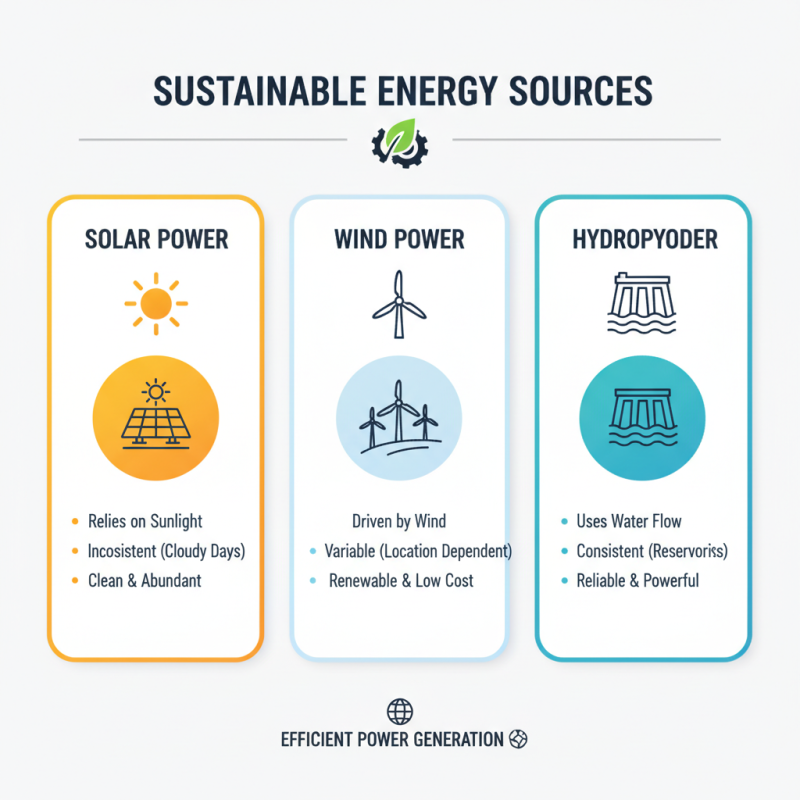
Identifying sustainable energy sources is essential for efficient power generation. Solar, wind, and hydropower are popular choices today. Each source has its unique benefits and challenges. For instance, solar energy relies on sunlight, which may not be consistent in certain regions. This dependency can limit its effectiveness during cloudy days.
Wind power stands out for its low emissions. However, it faces issues like noise and impact on wildlife. Integrating wind farms requires careful planning. Developers must assess local ecosystems. Hydropower, while reliable, can disrupt aquatic habitats. Balancing energy needs with nature conservation is crucial.
Investing in mixed energy solutions can enhance sustainability. Combining different sources helps address individual shortcomings. For example, pairing solar and wind can ensure a steadier energy supply. Still, this approach needs thorough evaluation to avoid high costs and inefficient systems. Sustainable energy development is a complex puzzle that requires ongoing reflection and adjustment.
Key Technologies for Enhancing Power Plant Efficiency
Enhancing power plant efficiency requires an understanding of key technologies. Modern plants utilize advanced turbine designs that maximize energy extraction. These turbines often integrate materials that withstand high temperatures, increasing overall effectiveness. However, achieving the ideal balance between materials and performance remains a challenge.
Additionally, implementing combined cycle systems can significantly boost efficiency. These systems capture waste heat and convert it into additional electricity. While they improve performance, the complexity of these setups can lead to maintenance issues. Regular assessments are crucial to keep operations running smoothly.
Adopting renewable energy sources also plays a vital role in sustainable power generation. Solar and wind technologies can supplement traditional plants, reducing carbon footprints. Yet, the transition comes with hurdles, such as energy storage and grid integration. Exploring solutions to these challenges is essential for a sustainable future.
Implementing Environmental Regulations and Best Practices
Building a power plant demands a focus on environmental regulations and best practices. Integrating these elements ensures sustainability and efficient operation. Compliance with local and national environmental laws is crucial. It minimizes risks and avoids penalties. Each step in the construction and operation phases must consider the impact on ecosystems.
Tips: Conduct a thorough environmental impact assessment before starting. This assessment highlights potential problems. Engaging with local communities can also bring insights. Their feedback often identifies issues that experts might overlook. Regular training on environmental best practices for staff enhances compliance. Simple guidelines can make a big difference.
Revisiting operational practices is essential. Periodic audits can reveal gaps in regulation adherence. Finding innovative solutions is not always easy. Sometimes, the technology might not fit. Alternatives should be considered, especially renewable energy options. Transitioning to greener sources requires patience and research, but the benefits are significant.
Evaluating Economic Factors in Power Plant Development and Management
Building a power plant requires careful economic considerations. The International Energy Agency (IEA) highlights that global investment in energy infrastructure reached $1.7 trillion in 2022. This figure underscores the financial commitment needed for sustainable development. Many projects exceed budgets. Between 2010 and 2019, nearly 60% of power projects went over budget.
Cost estimates should include local labor, materials, and technology. Regulatory compliance can further increase expenses. For example, compliance costs for environmental regulations can inflate overall budgets by an additional 20%. Development teams often overlook these factors, leading to unexpected financial burdens.
Financial modeling tools can aid developers. However, their effectiveness largely depends on accurate data input. Miscalculations are common, creating financial strain. The global shift toward renewable energy sources complicates these economic evaluations. The declining costs of solar and wind energy, with prices hitting lows of $20 to $30 per megawatt-hour, can mislead analysts. They may underestimate long-term viability. A careful balance of initial costs and future returns is essential for sustainability, yet many projects fail to achieve this.
Power Plant Efficiency and Sustainability Evaluation